
Design in Our World
Creative activities for Young Muslims
Design in Our World
Creative activities for Young Muslims
Islam Imagined is a free STEAM education platform offering 30+ ready-to-use classroom activities for Muslim educators, teachers, and homeschooling parents worldwide.
Browse through our collection of hands-on lessons and projects — designed for ages 6–16+ and aligned with the British National Curriculum, Cambridge International, and IB frameworks. Whether you teach in a school, madrasa, or home setting, these activities spark creativity, build confidence, and inspire new ideas.
Design a self-driving car, build a mosque in Minecraft, learn to fly with Ibn Firnas — the possibilities are endless!
There are many activities to explore under these three themes with Islamic heritage and values as a common thread:
1. DESIGN IN OUR WORLD
2. INNOVATION IN OUR HERITAGE
3. TECHNOLOGY OF THE FUTURE
Theme 1: Design In Our World
By mixing arts, technology, and science, our design activities encourage students to use their imagination to its highest potential. These hands-on classroom activities introduce core design concepts and processes aligned with the British National Curriculum for Design & Technology and Art & Design.
Students learn to identify problems, generate ideas, prototype solutions, and evaluate their work — key skills in both the British DT curriculum and Cambridge International frameworks. Whether used as standalone lessons or cross-curricular STEAM projects, these activities build creative confidence and critical thinking.
Check out the activities below, and click through to get started!
1. LEARN TO DESIGN!
Learn about the design process, so that you can invent new, important technologies to help people globally!
2. DO YOU WUDU?
Muslims perform wudu about five times day! But that can be challenging when you're not at home. Design an innovative and transportable wudu' bottle that's easy to carry around.
3. BECOME AN INVENTOR
Some of the most exciting creations made by humans started by asking a simple question: How can we make the impossible possible? Learn about the engineering process so that you, too, can invent.
4. SCHOOLS OF THE FUTURE
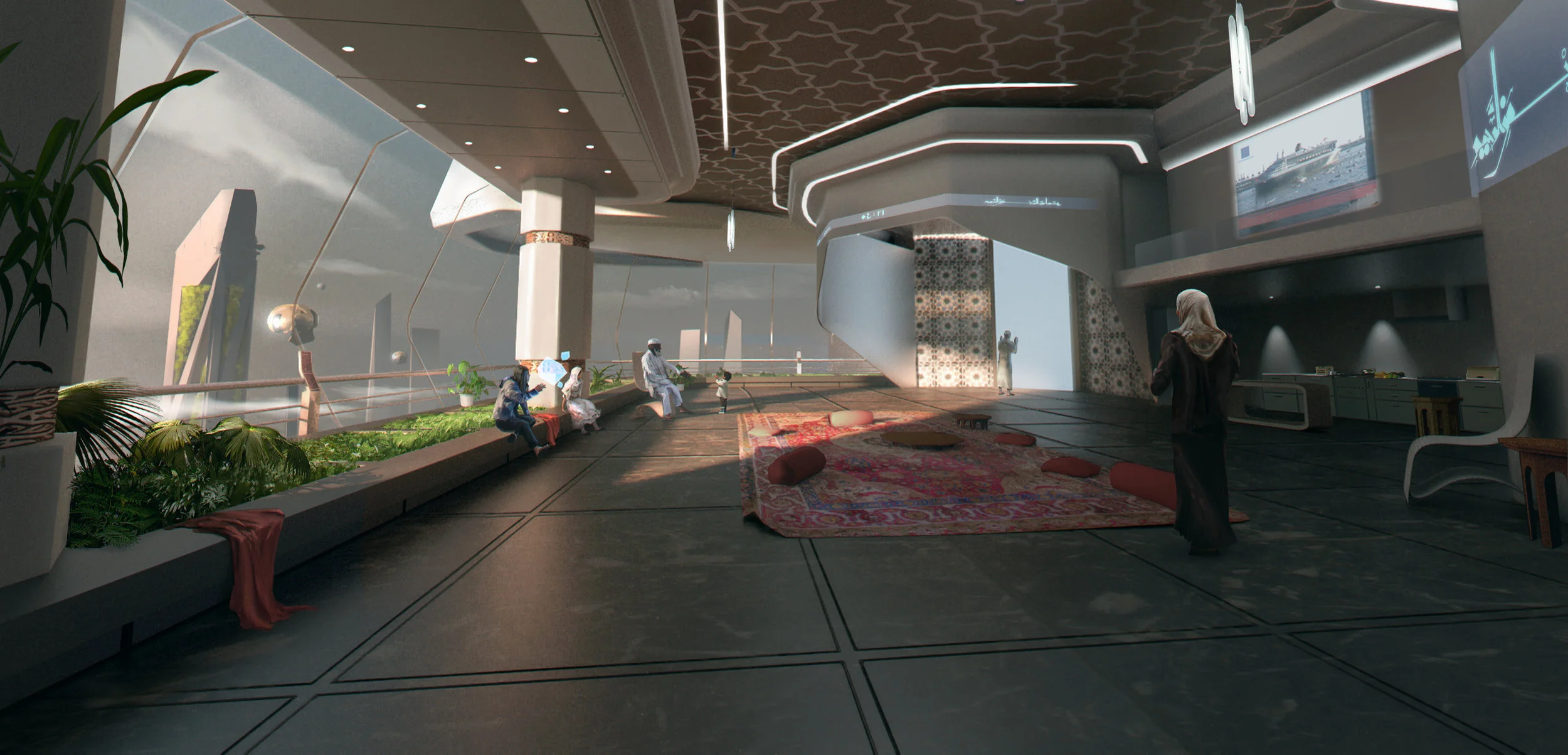
Because of emerging technology, schools will always keep changing and advancing. They won't always look the way they do now! Can you think of what the smart Islamic school of the future could look like?
5. 3d-pRINT YOUR IDEAS
Did you know that there are big printers that can print 3D objects? Imagine printing a prayer mat! Think of a new technology that could similarly create things people could use to help them.
6. MINECRAFT MOSQUE
Build a mosque in Minecraft to understand how the building process begins and ends, all in 3D space!
7. A MOSQUE IN SPACE
One day Muslims might be living in outer space! But where will they pray? Imagine what a space mosque might look like and the features it might need to protect the people inside.
8. Islamic Cities Of The Future
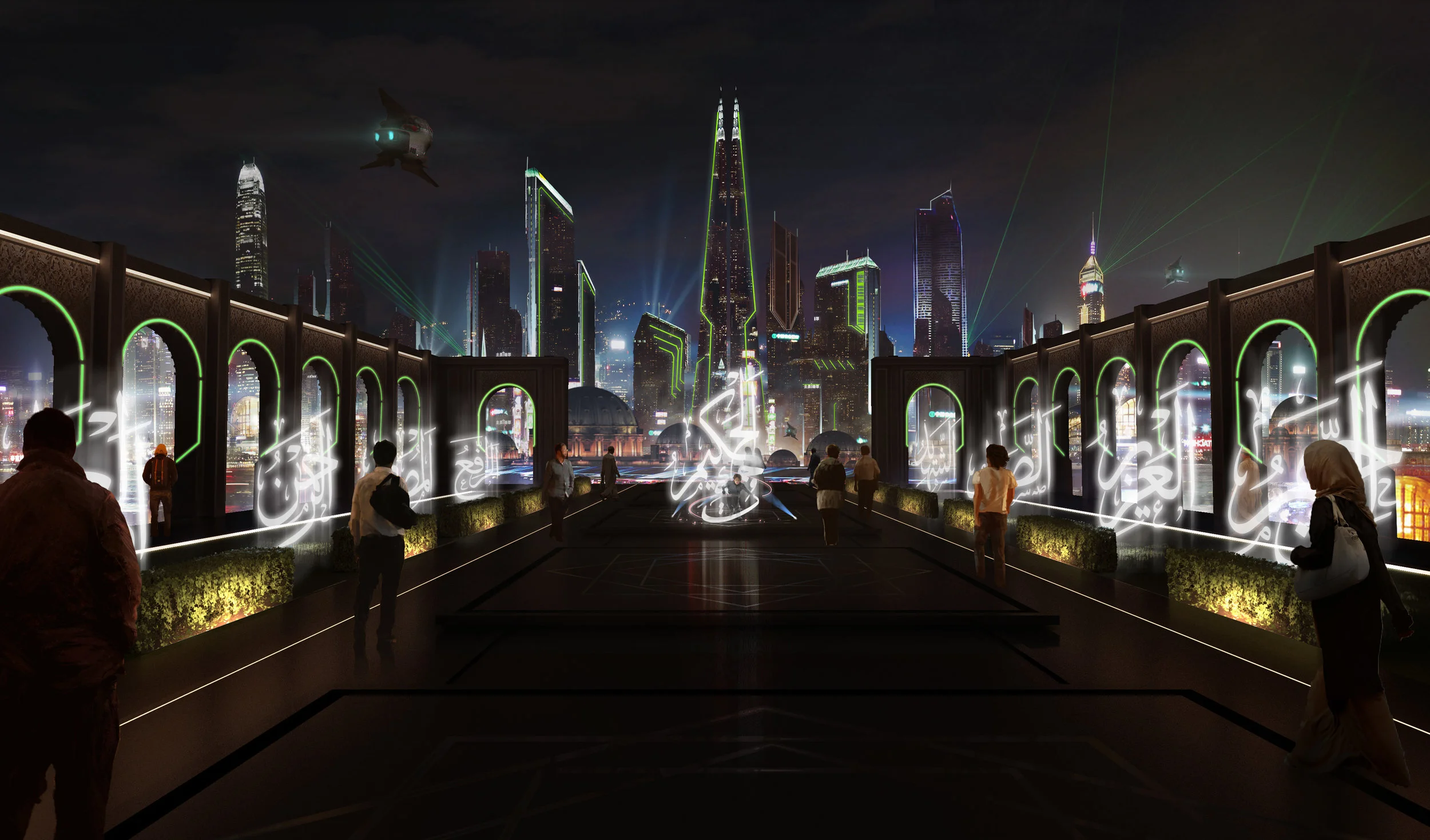
Envision a world with floating cities, upside down houses, and complex sky transport! Check out some futuristic artwork and imagine what Islamic cities could look like 1000 years from now!
9. Transportable prayer mat
When traveling we often forget to take a prayer mat with us, or it just doesn't fit in our bags! Your task is to design the prayer mat of the future, something that is easy to carry, remember, and use!
10. space da'wa
You've been asked to travel to a new planet to teach aliens about Islam! The problem is...it might take a long time to get there. Design a space exploration machine that can get you to outer space faster than any rocket.
Innovation In Our Heritage
innovation in our heritage
Innovation In Our Heritage
innovation in our heritage
THEME 2: innovation in our heritage
By challenging students to think originally with hands-on design projects, these classroom activities help young Muslims become confident in their creative abilities and experimentation. Each activity draws on Islamic history, art, and scientific heritage to meet key learning objectives in the British National Curriculum for History, Art & Design, and Science.
Students explore the contributions of Muslim scholars, artists, and inventors — from Al-Biruni and Ibn Firnas to contemporary calligraffiti artist eL Seed — building cultural pride while developing research, analysis, and creative skills aligned with British and Cambridge International curriculum frameworks.
Check out the activities below, and click through to get started!
1. Al-Biruni's Ocean Treasures
Al-Biruni was the first person to realise that some mountains were once under the sea! Build a sea exploration machine to navigate our underwater mountains and find rare fossils and treasure.
2. hoW TO FLY
Get to know Ibn Firnas, and other cool people who have helped create planes and rockets. Be inspired by their knowledge to invent your own flying machine.
3. Build an islamic palace!
Build and design a special palace for a Caliph! What if the beautiful palaces of the past could fly?
4. CAlligraffiti with el seed
Beautiful Arabic calligraphy has been in the Islamic tradition for over 1,400 years - and it continues to thrive! Get to know one of the world's most talented artists and try your hand at some calligraffiti.
5. living islamic art
Muslims have been using complex geometry to create beautiful and intricate Islamic art for thousands of years. Create some of your own, and imagine how Islamic vector art could evolve in the future.
6. RECREATE AN OLD WORLD
Augmented reality allows you to immerse yourself in entirely new worlds without moving from where you're sitting! Imagine how you might teach someone about Islamic history using augmented reality.
7. calligraphy of the future
You might think that Arabic calligraphy is a thing of the past, but you'd be wrong! Use your imagination to create an Arabic calligraphy of the future.
8. INVENT WITH AL-JAZARI
Learn about one of the first inventors in history, and design a ground-breaking engineering project!
9. time travel with al-tusi
Al-Tusi was the first person to realise that animals adapt to their environment to survive. But this takes a long time! Build a time machine to take you to the future, so you can see how today's animals might change!
10. virtual reality makkah
One day people might be able to visit Makkah from their home. How, you ask? Through virtual reality of course! Think about virtual reality and what other uses it could have beyond entertainment.
Technology of the Future
technology of the future
Technology of the Future
technology of the future
THEME 3: technology of the future
Self-driving cars, personal drones, coding for convenience, and artificial intelligence will shape our future. These classroom activities introduce students to emerging technologies through hands-on projects that develop computational thinking, problem-solving, and digital literacy — core skills in the British National Curriculum for Computing, Science, and Design & Technology.
From learning to code and building AI systems to designing sustainable mosques and creating podcasts, students explore how technology can serve communities and solve real-world problems. Activities align with British, Cambridge International, and IB curriculum frameworks and are suitable for ages 6–16+.
Check out the activities below, and click through to get started!
1. LEARN TO CODE
Coding is a way to talk to computers or systems and tell them what to do! Try your hand at coding, then think about how it has impacted your life, and how it can change the future.
2. Build a toy with Loujee
As Muslims, we learn Arabic to help us read and understand the Quran. One of the ways we can learn Arabic is with Loujee. Your task is to design your own toy to help teach other kids Arabic as well as Loujee does!
3. ramadan ROBOT
Design a storage robot that can organise people's shoes in the masjid during Ramadan, so that it stays clean and people get their shoes back quickly and correctly!
4. Robot dinosaurs
Imagine bringing a dinosaur back to life! This might actually be possible through brilliant robotic technologies. Design your own robot dinosaur, and think about how would it help society!
5. build a car
Driving to the mosque with your parents at fajr time for prayer can be dangerous when you're still sleepy! Your mission is to design a car that drives on its own!
6. Bring a computer to life
Artificial intelligence is like a person with superhuman powers! Except it's really just a machine. Give a computer a mind of its own, and make it do amazing things!
7. drone to the rescue!
In the future, fresh water resources might become rarer and harder to access. But we need clean water for wudu' and to keep clean! Can you build an advanced drone that can locate hidden water sources from high above?
8. books of the future
Use augmented reality to create a 'future book' to imagine how reading could be improved to make learning more fun, and much easier to remember!
9. salam Sensors
With the 'internet of everything,' machines and items of the future might be able to use the internet to talk to each other. Learn about the IOE and think about what amazing things you could do!
10. GREEN ISLAM
An important Islamic principle is taking care of the environment. Your task is to invent the ultimate smart environment-cleaning machine.